

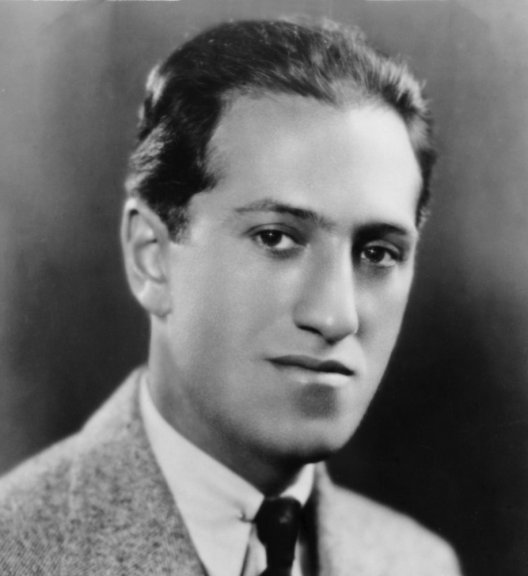
The man who taught the concert hall to swing
George Gershwin is the sound of the American century. A Brooklyn street kid whose life changed when a piano was hoisted into the family flat, he grew up to write the wailing clarinet slide that opens Rhapsody in Blue – one of the great opening gestures in all of music – and "Summertime", a lullaby the whole planet knows by heart. Nobody before him moved so freely between Broadway and the concert hall, and nobody has done it with more charm since.
From Tin Pan Alley to Carnegie Hall
Gershwin left school at fifteen to bang out songs for a music publisher, had America singing "Swanee" by twenty, and at twenty-five composed Rhapsody in Blue in a matter of weeks – famously improvising stretches of the piano part at the 1924 premiere, because he had not had time to write them down. The piece made "serious" music sound American overnight. He followed it with An American in Paris, scored for real Parisian taxi horns he carried home in his luggage, and crowned his career with the opera Porgy and Bess, home of "Summertime". He died of a brain tumour in 1937, aged just thirty-eight, at the very height of his fame.
Gershwin and Prague
Prague is a city with a jazz heart of its own – and Gershwin is the moment its concert halls start to swing. Rhapsody in Blue and "Summertime" are fixtures of Prague's gala programmes, and there is a special pleasure in hearing that bluesy clarinet rise beneath vaults centuries older than jazz itself: the American century meeting old Europe halfway. Fittingly for one of the most covered songs on earth, "Summertime" gets new Prague interpretations almost nightly – in concert halls and jazz cellars alike.