

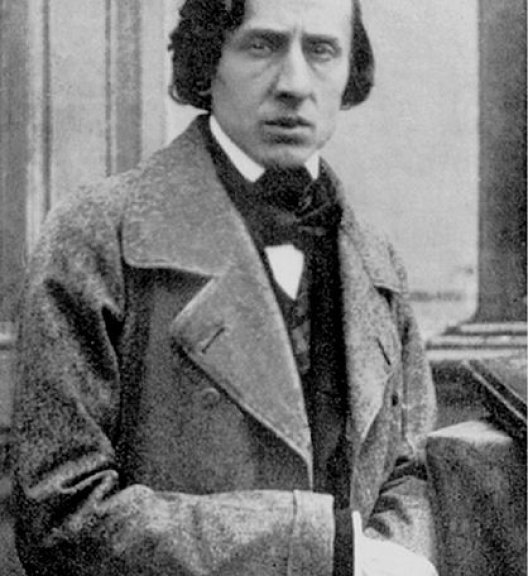
The poet of the piano
No composer has ever been so completely at one with a single instrument. Frédéric Chopin wrote some two hundred and thirty works, and virtually every one of them is for the piano – nocturnes that turned the instrument into a singing voice, polonaises and mazurkas that carried the soul of his native Poland, études that pianists still measure themselves against two centuries later. He composed no symphonies and no operas; he simply made the piano say everything.
A Pole in Paris
Chopin left Warsaw at twenty, carrying a silver cup of Polish soil – weeks later an uprising broke out, and he never saw his homeland again. He settled in Paris among the exiles and poets, and became the most sought-after piano teacher and salon performer in Europe. Big stages terrified him: in his entire career he gave only around thirty public concerts, preferring candlelit rooms where every whispered nuance could be heard. After a famously stormy decade with the novelist George Sand – including a rain-soaked winter on Majorca that gave the world his Preludes – his health failed, and he died in Paris in 1849, aged just thirty-nine. At his funeral, by his own wish, the choir sang Mozart's Requiem.
Chopin and Prague
In the summer of 1829, the nineteen-year-old Chopin stopped in Prague fresh from his triumphant Vienna debut. He admired the castle and the cathedral, was promptly asked to give a concert – and declined, reportedly joking that even Paganini had not escaped criticism from Prague's famously demanding public. Bohemia kept drawing him back all the same: he improvised for an enchanted audience at a princely palace in Teplice, embraced his parents for the last time in Karlovy Vary in 1835, and courted his great love Maria Wodzińska during a spa summer in Mariánské Lázně. Today his nocturnes and waltzes sound in Prague's intimate concert halls – exactly the kind of setting he always preferred.