

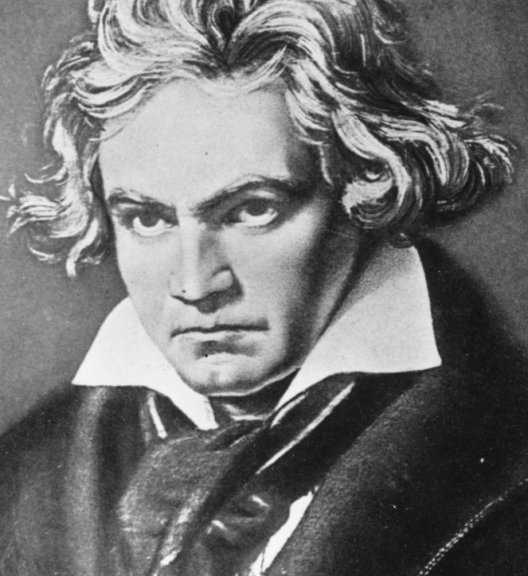
The revolutionary who set music free
Ludwig van Beethoven arrived in Vienna at 21 with a note from his patron promising he would "receive the spirit of Mozart from Haydn's hands" – and within a decade he had outgrown them both. He first conquered the city as a volcanic piano virtuoso and improviser, then went on to stretch every musical form he touched: nine symphonies, 32 piano sonatas, five piano concertos and one defiant opera, Fidelio. In his hands the elegant Classical style of Haydn and Mozart became something new – music about freedom, struggle and joy, written for all humanity.
Triumph over silence
Before he turned thirty, Beethoven noticed his hearing was failing. In 1802 he poured his despair into the "Heiligenstadt Testament", a letter to his brothers confessing that only his art had held him back from ending his life. What followed was the most astonishing creative run in the history of music: the Eroica, the Fifth with its four-note knock of fate, the Pastoral, the Emperor Concerto. His final decade he spent completely deaf, communicating through notebooks – yet it produced his boldest work of all, the Ninth Symphony with its "Ode to Joy", and the visionary late string quartets, composed entirely in inner silence. When he died in Vienna in 1827, an estimated twenty thousand people followed his coffin.
Beethoven and Prague
In 1796 the young virtuoso spent several weeks in Prague, performing for the same aristocratic circles that had cheered Mozart a decade earlier and composing his dramatic concert aria "Ah! perfido", first sung by the Prague soprano Josepha Dušková – Mozart's friend. He returned for more concerts two years later. His most devoted patron was Prince Lobkowicz of the old Bohemian family, and Beethoven repaid that generosity by dedicating to him the Fifth and Pastoral symphonies and above all the Eroica – the symphony he had originally named for Napoleon, before furiously tearing up the title page when Bonaparte crowned himself emperor. The Lobkowicz Palace at Prague Castle still guards original Beethoven manuscripts – and hosts classical concerts to this day, so you can hear his music just a few steps from the scores he wrote.