


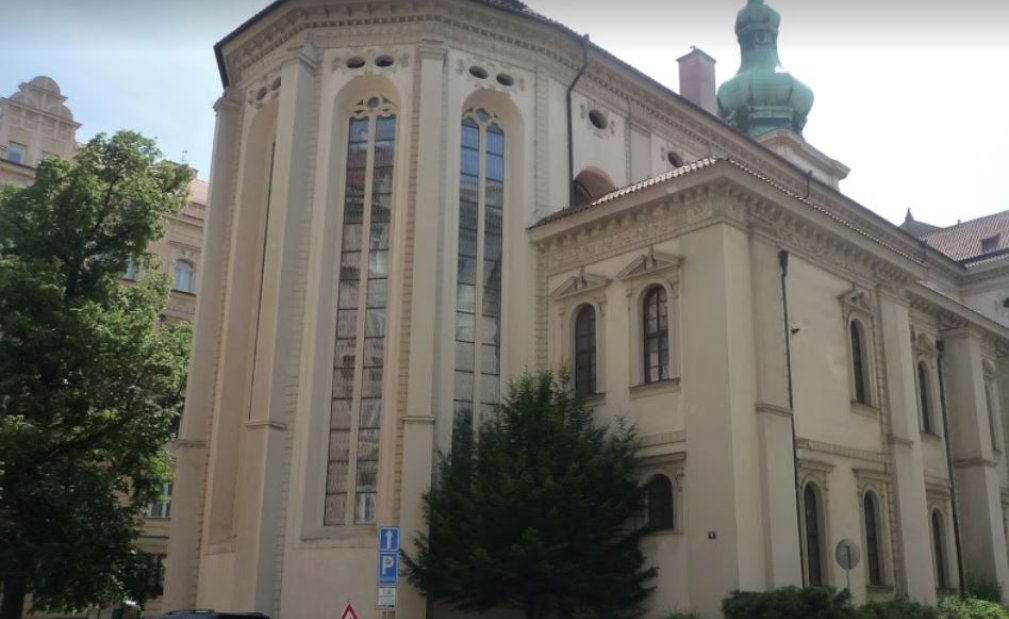

Built for Prague’s German Lutherans in 1611–1614, the Church of the Holy Saviour is a Renaissance landmark and an established concert venue near Old Town Square.
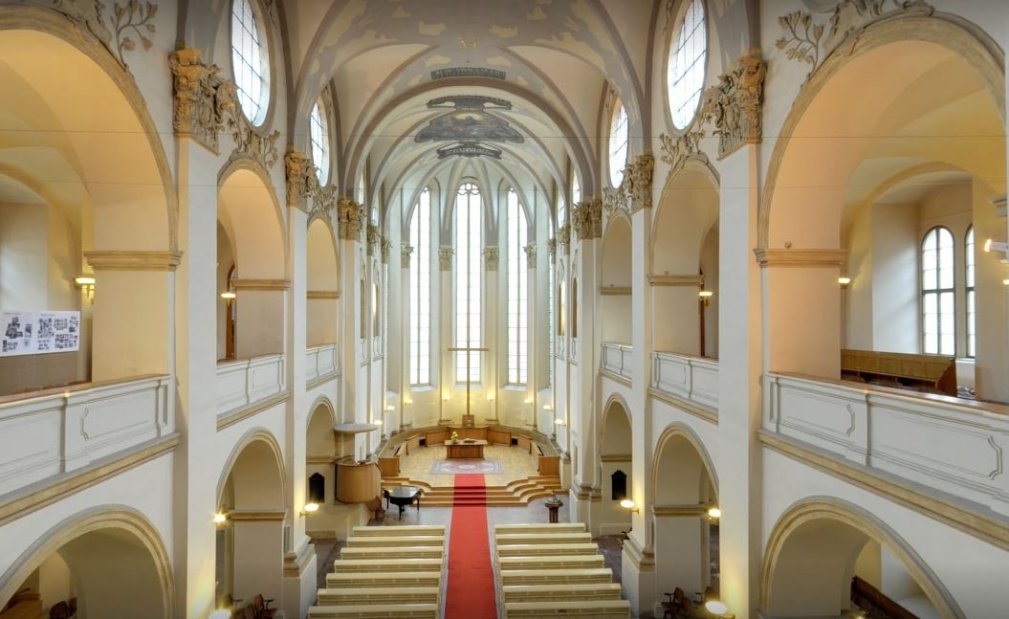
Known in Czech as Kostel U Salvátora, the church stands on Salvátorská Street a few minutes from Old Town Square. Its tall three-aisled interior, side galleries and surviving ceiling paintings create a distinctive setting for organ, choral and chamber music. Today it is home to a congregation of the Evangelical Church of Czech Brethren and remains an active place of worship.
A Lutheran church on oak foundations
After Rudolf II issued the Letter of Majesty in 1609, Prague’s German Lutherans began building their own church. Count Jáchym Ondřej Šlik secured the site, and Jan Kryštof of Graubünden directed construction from 1611 to 1614. The design is traditionally attributed to Giovanni Maria Filippi, although other authorship has also been proposed.
Because the ground contained shifting sands, the church and neighbouring rectory were founded on massive oak piles that still support them. The church was formally opened for worship on 5 October 1614.
A Renaissance building reshaped by history
The basilican church combines late-Renaissance architecture with Gothic-inspired windows and a polygonal chancel. After the Battle of White Mountain, its Lutheran ministers were expelled and the building passed to the Paulan order in 1626.
A major fire in 1689 damaged the roof, towers, vault and paintings. The subsequent reconstruction introduced Baroque features, followed by Rococo stucco decoration in the 18th century. After the Paulan monastery was dissolved in 1784, the complex became part of the Prague Mint. Bohemian Protestants purchased the church in 1863 and reopened it for worship in 1865.
A 48-stop organ and living concert tradition
The most prominent ceiling painting shows the blessing Saviour surrounded by angels. The organ, rebuilt and expanded by Hermann Eule Orgelbau and completed in 2010, has three manuals, mechanical action and 48 stops. Its Central German tonal design is suited to repertoire from the Baroque to early Romanticism.
Regular Organ Evenings at the Holy Saviour continue a concert tradition that also brings choirs, chamber ensembles and orchestras into the church.
Upcoming concerts at this venue
There are currently no upcoming concerts scheduled at this venue.
Browse all concerts