


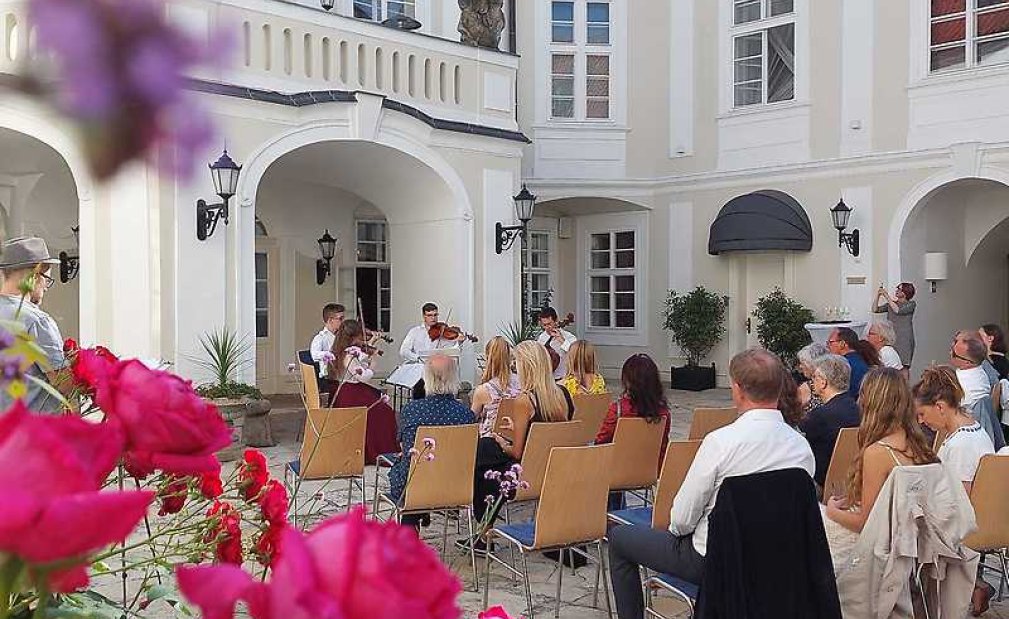
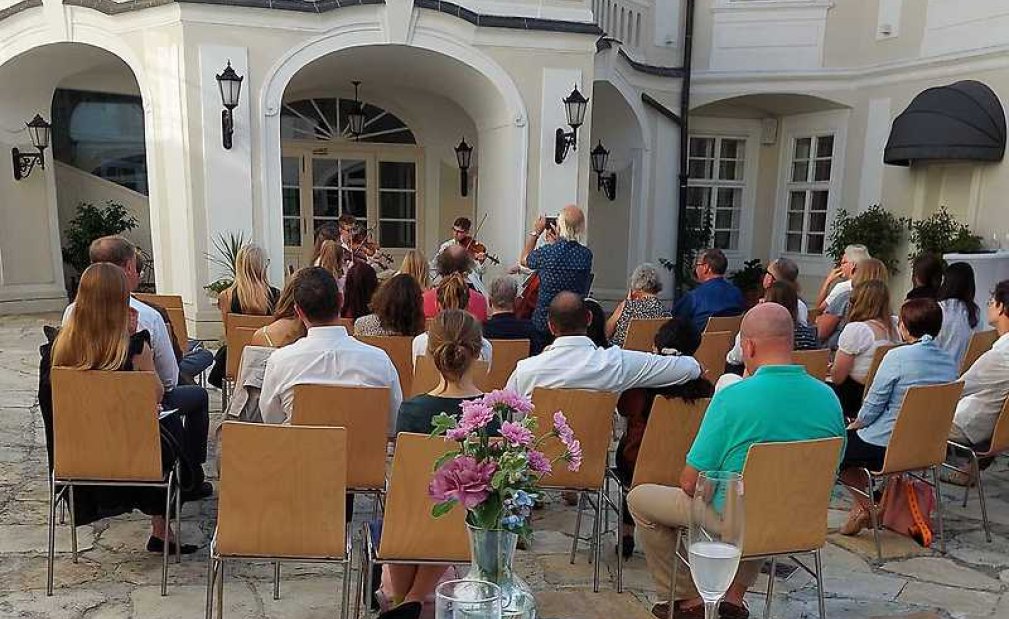
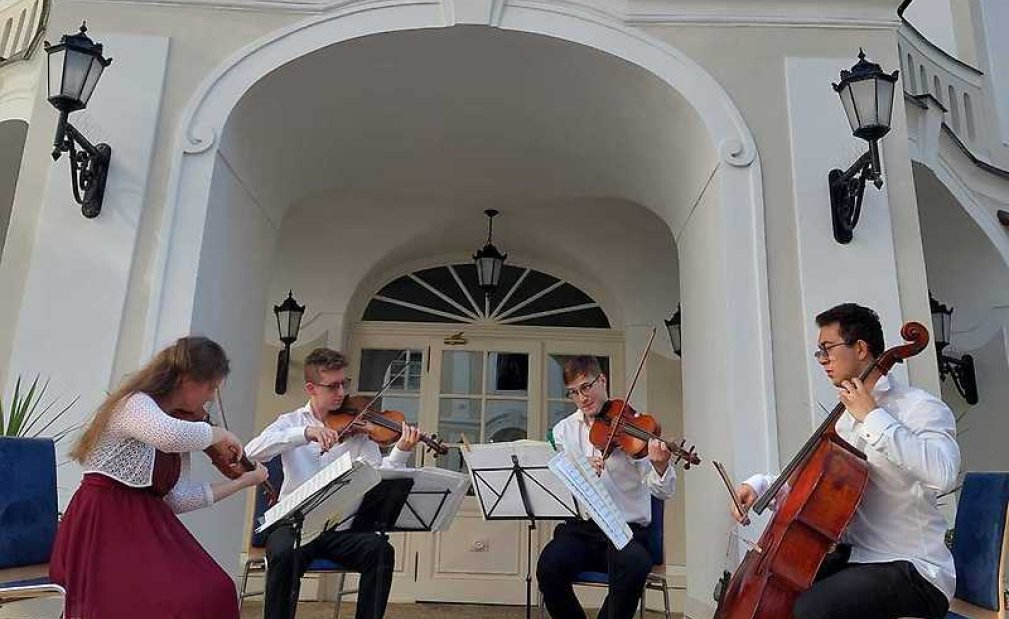
Occasional concerts at The Mozart Prague bring chamber music into Pachta Palace, a Rococo Old Town residence with a documented connection to Mozart and Prague’s musical life.
The five-star hotel stands at Karoliny Světlé 208/34, close to Charles Bridge on the Old Town side of the Vltava. Its historic complex combines the Rococo Pachta Palace with a 19th-century Neoclassical wing and two courtyards, creating an atmosphere closer to a private cultural gathering than a purpose-built concert hall.
A Rococo palace shaped from older houses
The Pachta family began assembling the site from several older houses in the 17th century. After 1770, Count Hubert Karel Pachta had them transformed into an irregular four-winged Rococo palace, most probably to a design by Jan Josef Wirch.
In 1836, architect Jan Maxmilián Heger added a three-storey Neoclassical wing towards the river and connected it to the older palace. The addition enclosed a second courtyard and shaped the complex seen today.
Mozart, Count Pachta and six dances
A Prague 1 archival study records Mozart’s visit to this palace in 1787 as a historical fact. Count Jan Josef Pachta was himself a musician and composer and maintained a chamber orchestra.
Mozart completed his Six German Dances, K. 509, in Prague on 6 February 1787, and tradition links the work with Count Pachta. Exactly where the dances were written remains uncertain because the family owned several Prague palaces. The story that Mozart was locked in a salon until he delivered the music is best treated as legend, not established fact.
From a musical academy to a modern hotel
Around 1840, the Žofín Academy, a singing and music society, used the palace’s large hall. It later focused on piano teaching.
The complex opened as a hotel in 2004 and has carried its present name since 2021. Today, its two historic courtyards, restaurant, café and private rooms can be adapted for events. The original Rococo courtyard is especially notable for its natural acoustics.
Upcoming concerts at this venue
There are currently no upcoming concerts scheduled at this venue.
Browse all concerts