

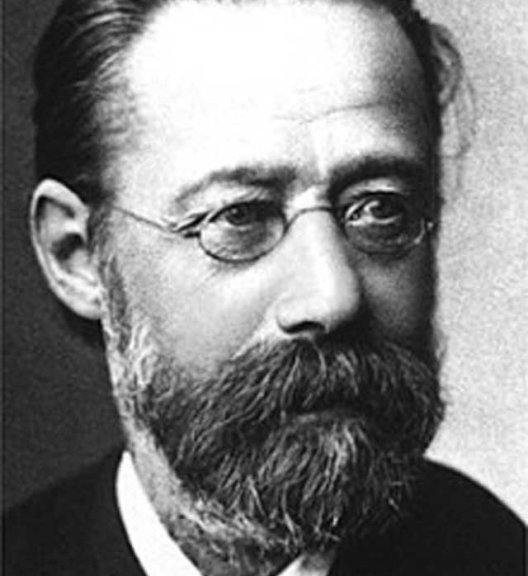
The man who gave the Czech nation its sound
Bedřich Smetana is the founding father of Czech music – the first composer to make Bohemia itself sing. His Vltava (The Moldau), a musical portrait of the river that flows through the heart of Prague, may be the most beloved Czech melody ever written, and his sparkling comic opera The Bartered Bride remains the cornerstone of the national repertoire. A piano prodigy who gave his first public performance at the age of six, Smetana spent his life fighting for something that did not yet exist: a proudly Czech voice in classical music.
Triumph, silence and Má vlast
Success did not come easily. Unable to make a living in Bohemia, Smetana spent five years as a conductor and teacher in Sweden before returning to a Prague newly hungry for national culture. The Bartered Bride finally made his name – and then, in 1874, at the age of fifty, he lost his hearing completely within a few months. What followed is one of the most astonishing feats in music: in total silence he composed his greatest work, Má vlast (My Homeland), a cycle of six symphonic poems crowned by Vltava. Beethoven wrote his Ninth partly deaf; Smetana wrote all of Má vlast without hearing a single note of it.
Smetana and Prague
Smetana's story is a Prague story. He ran a music school here, and as principal conductor of the Provisional Theatre he led the city's musical life for a decade – with a young Antonín Dvořák playing viola under his baton. When the National Theatre opened in 1881, it did so with his festive opera Libuše; the composer sat in the audience, unable to hear a note of his own music or the ovation that followed. He died in Prague in 1884 and lies buried at Vyšehrad, a few steps from where Dvořák would later join him. Today the grandest concert hall in the Municipal House bears his name – Smetana Hall – and the Vltava itself flows past his riverside museum on its way under Charles Bridge, exactly as it does in his music.