

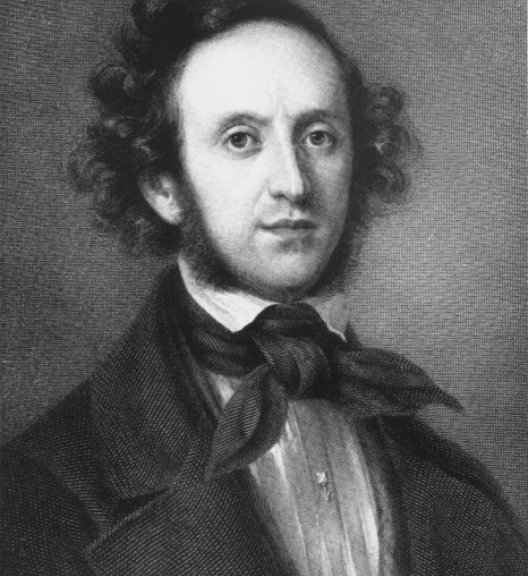
Felix – the lucky one
His name means "happy, lucky" in Latin, and rarely has a name fitted better. Felix Mendelssohn was born into a brilliant Berlin family – his grandfather a famous philosopher, his father a banker – and blessed with talents that made the rest of Europe blink: composer, star conductor, virtuoso pianist, gifted painter. As a teenager he wrote music of a polish many masters never reach, including the sparkling overture to A Midsummer Night's Dream at seventeen; sixteen years later he returned to the same play and added a little processional we now call the Wedding March.
The man who resurrected Bach
Mendelssohn's greatest single deed belongs to musical history: at twenty, he conducted the first performance of Bach's St Matthew Passion since the composer's death – the 1829 revival that rescued Bach from decades of oblivion and set off a renaissance that has never ended. He went on to lead Leipzig's Gewandhaus Orchestra and found Germany's first conservatory, while in England Queen Victoria declared him her favourite composer and welcomed him at Buckingham Palace like family. The luck ran out early: months after the death of his beloved sister Fanny, a gifted composer herself, Mendelssohn died of a series of strokes at just thirty-eight.
Mendelssohn and Prague
Somewhere in Prague, almost every day, somebody walks down the aisle to Mendelssohn's Wedding March – the city is one of Europe's favourite places to marry, and his march has accompanied brides ever since Queen Victoria's daughter chose it for her own royal wedding in 1858. Concert-goers meet him here too: his Violin Concerto and Songs Without Words grace Prague's programmes, and whenever Bach's music fills a Prague church, a small debt is owed to the twenty-year-old who brought Bach back for all of us.